
Loading...
Serving Homestead, FL and surrounding areas. (786) 244-9586
New terrazzo installation and expert restoration of original South Florida floors. If the original terrazzo is hiding under your carpet, we can bring it back for far less than starting over.
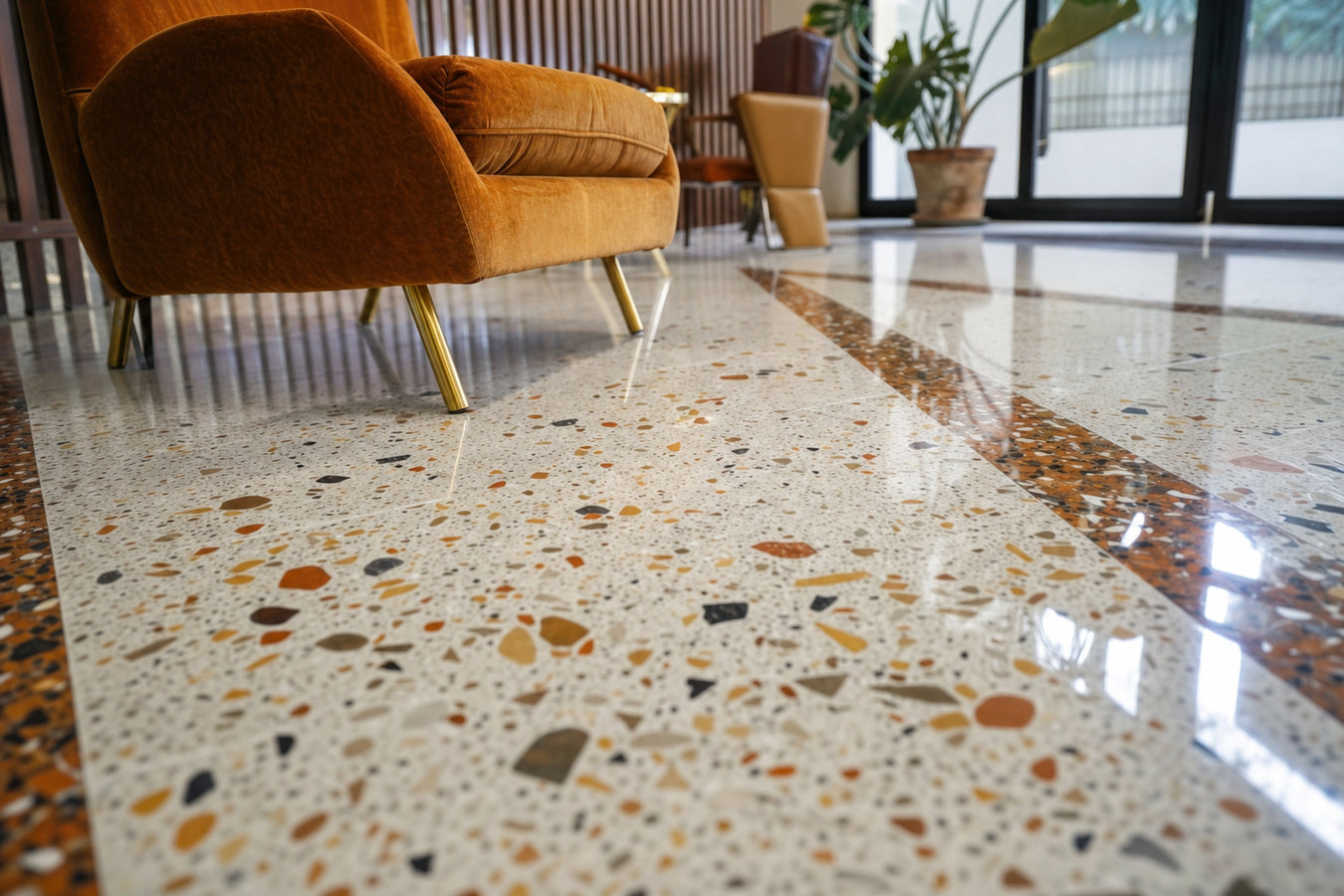
Terrazzo flooring in Homestead is made by embedding small chips of marble, glass, or stone into a cement or resin base, then grinding and polishing the surface to a smooth, seamless finish - most residential jobs run three to seven days, with the finished floor ready for daily use after the sealer cures.
This is a flooring material with a long history in South Florida. A large portion of Homestead homes built between the 1950s and 1970s originally had terrazzo floors, and many of those floors are still in excellent condition today - sometimes hiding under decades of carpet or vinyl. If your home is from that era, there is a real chance the original terrazzo is closer than you think, and restoration is often the most cost-effective path forward. If you want color added to a freshly ground or existing slab alongside the aggregate finish, our stained concrete flooring service can work alongside terrazzo in different areas of your home.
Terrazzo is one of the few flooring materials that genuinely improves with restoration. Grinding brings the surface back to fresh material, repairs blend in naturally with the surrounding chips, and a new sealer restores the shine. The National Terrazzo and Mosaic Association sets the installation and restoration standards that qualified contractors follow throughout the country.
If you pull up a corner of carpet or vinyl in a closet and see a hard surface with small colored chips set in a solid base, that is original terrazzo. This is common in Homestead homes built before 1980. The floor underneath is often in better shape than expected - a professional can assess whether it needs minor repair and repolishing or more involved restoration work.
Terrazzo that has not been resealed in years gradually loses its luster. If mopping does not seem to help, or if you can see fine scratches in raking light, the floor needs professional grinding and repolishing - not replacement. This is a restoration job, and it costs far less than tearing out and starting over.
Small chips and hairline cracks are common in older Homestead homes, especially where the slab has experienced minor movement over the years. An unsealed crack can let moisture into the floor - a real concern in South Florida's humid climate. A terrazzo contractor can fill and color-match repairs so they blend with the rest of the surface.
Terrazzo that has lost its sealer absorbs spills - especially acidic ones like citrus juice or cleaning products - and develops stains that regular mopping cannot remove. If you have dark or discolored patches that have been there a while, the sealer has likely broken down. Professional repolishing and resealing can often reduce or remove those stains entirely.
We handle both new terrazzo installation and restoration of existing floors. For new installation, we use cement-based and epoxy-based systems - cement terrazzo is poured directly onto the slab and is the traditional choice for South Florida homes, while epoxy systems are thinner, lighter, and can go over existing floors without demolition in some cases. We work with you on color combinations, chip size, and pattern or border designs before any material goes down, so there are no surprises when the floor is finished. Homestead homes built on concrete slabs - which is nearly all of them - are an ideal base for terrazzo, and that simplifies the process considerably.
Restoration is often the better choice for homes with original terrazzo. The process starts with grinding away the worn surface layer, then progresses through progressively finer polishing steps until the floor is smooth and level. Chips and cracks are repaired and color-matched before the final polish. A penetrating sealer finishes every job - protecting the floor from the humidity and cleaning product exposure that Homestead homes deal with year-round. For floors that need significant prep before terrazzo work can begin, our basement flooring service covers slab preparation and coating options for ground-floor utility spaces.
Best for homeowners who want the traditional South Florida look with maximum durability - poured directly onto the concrete slab for a floor that can last 75 years or more.
Best for homeowners who want a thinner, lighter installation that may be able to go over an existing floor without full removal - and for applications where a wider color range is needed.
Best for Homestead homes built before 1980 where original terrazzo is hiding under carpet or vinyl - restoration costs significantly less than new installation and preserves the original floor.
Best for floors that are structurally sound but show surface damage - chips are color-matched, cracks are filled, and a fresh sealer restores protection and shine.
Homestead sits in one of the most humid parts of the continental United States, and most homes in the area are built on concrete slabs - the ideal base for terrazzo. Unlike wood, terrazzo does not warp or buckle when humidity rises. Unlike vinyl or carpet, it does not trap moisture or grow mold in a climate where indoor humidity can stay high for months at a stretch. Properly sealed terrazzo handles South Florida conditions the way the material was designed to - it has been proven in this exact climate for over 70 years. Homeowners in Florida City and Leisure City face the same climate conditions and the same housing stock, and terrazzo is just as practical a choice for them as it is for Homestead homeowners.
The timing of a terrazzo project matters in Homestead. Hurricane season runs from June through November, and contractor availability tightens as storm-related repair work picks up. Scheduling terrazzo work in late winter or early spring - when humidity is lower and contractors have more flexibility - gives the project the best conditions for curing and the most predictable timeline. Miami-Dade County also maintains some of the strictest building standards in the country, and any work involving structural changes to the slab may require a permit through the county building department. A contractor who knows the local code handles that process correctly without putting the burden on you.
When you reach out, we ask a few basic questions - the size of the area, whether you have existing terrazzo or want new installation, and what condition the floor is in now. You will hear back within one business day to schedule an in-person visit, because an accurate price requires seeing the slab.
During the visit we check the existing floor, look for cracks or slab damage, and review design options with you - color combinations, chip size, and any pattern or border work. This is the right time to ask questions and confirm what the finished floor will look like before any commitment is made.
For new terrazzo, we install divider strips, pour and spread the mix, then allow curing before grinding begins. For restoration, we go straight to grinding with progressively finer equipment. The grinding phase is the noisiest part - the area stays off-limits until the floor is ready for sealing.
After the surface is smooth and level, we apply a penetrating sealer and allow it to cure - typically 24 to 48 hours before the floor can be walked on. Before we leave, we walk through the finished area with you and cover cleaning and maintenance so the floor stays protected long-term.
Free on-site estimate. We come to you, assess your slab, and give you a clear written quote - no obligation.
(786) 244-9586We do not quote terrazzo work over the phone. The condition of your slab - its moisture level, surface damage, and any existing floor on top - determines the scope and the price. Showing up in person is the only honest way to give you an accurate number, and we do it at no cost to you.
South Florida's humidity affects how terrazzo cures and how well sealers bond to the surface. We schedule work around moisture conditions, use products formulated for tropical climates, and do not rush phases that require time to cure properly. That discipline is what separates a floor that holds up from one that fails in the first rainy season.
Homestead has a large stock of mid-century homes with original terrazzo still under the carpet. We assess every floor before recommending new installation - in many cases, restoration is the better choice, both for cost and for preserving the character of the home. The National Terrazzo and Mosaic Association guidelines inform how we evaluate and restore existing floors.
We know which terrazzo projects in Miami-Dade County require permits and which do not. If your project needs one, we handle the process with the county building department - you do not have to navigate that yourself. Homestead falls under one of the strictest local building codes in the country, and working within it correctly protects you from liability after the job is done.
Terrazzo is a craft that rewards attention to detail at every step - from the initial slab assessment through the final sealer application. When those steps are done right in Homestead's climate, the floor holds up for decades without major intervention.
Durable slab coatings and overlays that handle South Florida moisture, turning underused ground-floor spaces into finished, functional rooms.
Learn MorePermanent color that penetrates your concrete slab - no coatings to peel, no patterns to repeat, just a finish as unique as the slab itself.
Learn MoreContractor availability tightens before hurricane season - reach out now and we will lock in your date with a free estimate.