
Loading...
Serving Homestead, FL and surrounding areas. (786) 244-9586
Homestead slab floors fail when moisture is not managed first. We test before we coat, so your floor holds up through the rainy season and beyond.
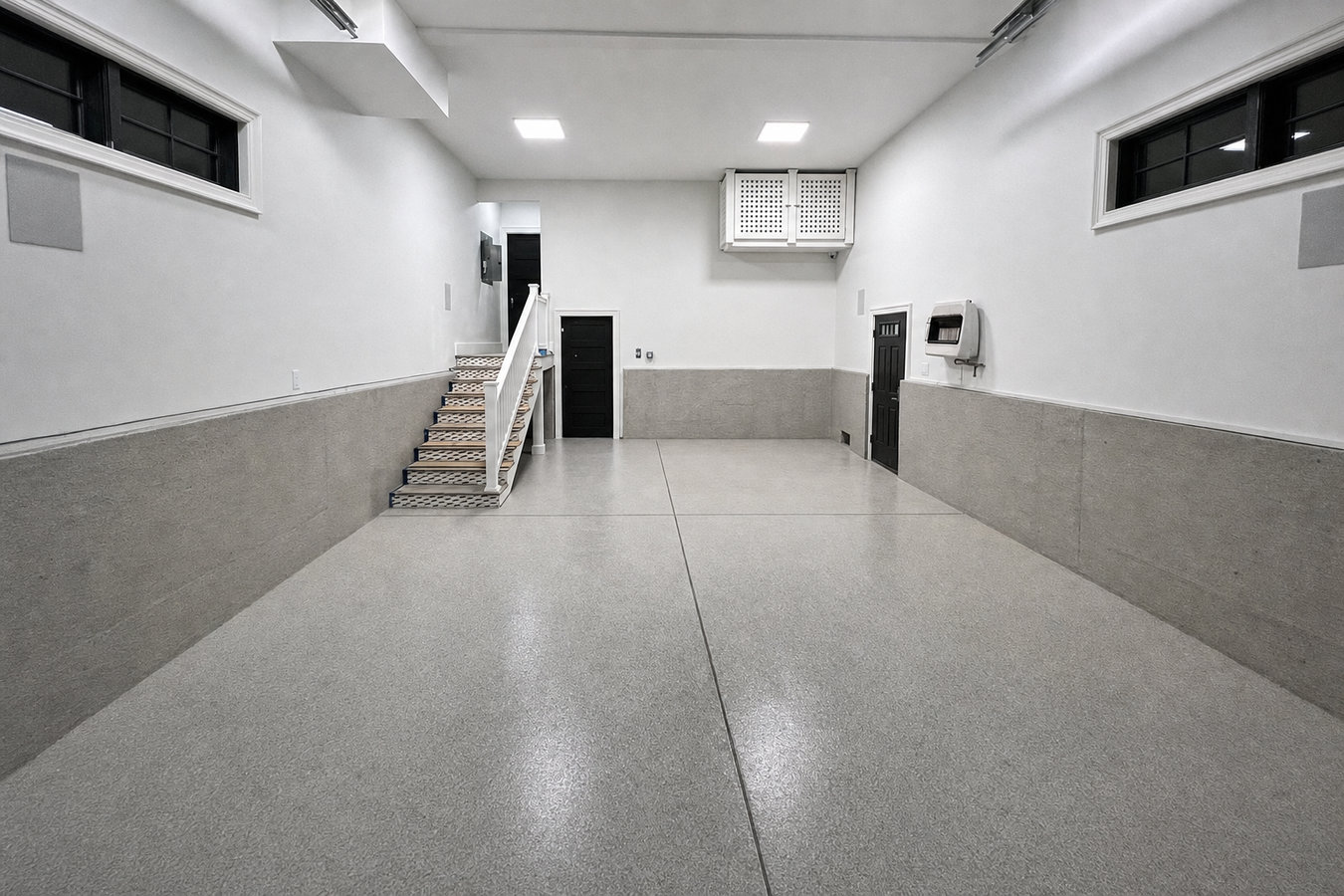
Basement flooring in Homestead means coating, resurfacing, or finishing a ground-level concrete slab - true below-grade basements are almost unheard of here because the water table sits just a few feet below the surface throughout Miami-Dade County - most straightforward jobs run one to three days depending on the size of the space and the finish chosen.
What makes basement and ground-floor flooring work in Homestead different from most other parts of the country is moisture. The Biscayne Aquifer creates a shallow water table that pushes moisture upward through concrete slabs constantly - and if that is not addressed before a new floor goes down, coatings peel, tiles pop, and the job fails within a season. Testing the slab for moisture vapor transmission before work begins is not optional here - it is the step that determines whether everything else holds up. If you are considering a floor specifically for a renovated utility or garage space, our concrete grinding and surface preparation service handles the slab work that needs to happen before any coating can be applied.
The good news is that the slab itself - in most Homestead homes - is an excellent foundation once the moisture issue is managed. Concrete slab construction is standard throughout South Florida, which means the base you are working with is solid and well-suited to coatings and overlays that bond directly to the concrete.
If you notice moisture on your slab floor after a heavy storm - or even on a humid morning when it has not rained - water is moving up through the concrete. In Homestead, where the water table is high and summer storms are intense, this is common and fixable. It must be addressed before any new flooring goes down or the new floor will fail the same way.
When tiles lift at the edges or a painted floor starts to flake, moisture got underneath and broke the bond. This is common in South Florida homes where flooring was installed without moisture testing first. The fix is not cosmetic - the underlying cause needs to be treated or any new floor will fail the same way within a few seasons.
Bare concrete exposed to years of humidity, cleaning products, and foot traffic often develops surface damage that makes a room look neglected. If your slab has cracks wider than a hairline, dark staining, or areas that feel rough or uneven underfoot, a professional assessment will tell you whether a coating or overlay can address it and what the prep work requires.
Many Homestead homeowners are turning garages, laundry rooms, or ground-floor utility spaces into home offices, gyms, or extra living areas. A bare concrete slab is fine for storage but not comfortable or attractive for daily use. A properly installed floor coating transforms the space quickly and holds up to the heat and humidity that would damage carpet or laminate in this climate.
Every job starts with a moisture test and a thorough surface assessment - we do not skip this step. Depending on what we find, we may recommend a moisture mitigation treatment before any coating goes down. From there, the finish options range from straightforward single-color epoxy coatings to decorative multi-layer systems with broadcast flake or quartz aggregates. Epoxy and polyurea coatings bond directly to the concrete, have no seams for moisture to enter, and can be finished with a slip-resistant texture - a real practical benefit in a home that gets tracked-in rain from Homestead's daily summer storms. The National Floor Safety Institute identifies slip resistance as a critical factor for wet-zone and utility floor coatings.
For floors that need more than a coating - cracked slabs, uneven surfaces, or rooms being converted from utility to living space - decorative overlays can level and resurface the slab before the finish coat goes down. We also handle the concrete sealing that protects the finished floor long-term. For ongoing slab protection after the initial coating, our concrete sealing service covers maintenance and resealing work to keep the surface performing in South Florida's climate.
Best for homeowners who want a durable, easy-to-clean finish that bonds tightly to the slab and holds up to heat, moisture, and daily use in South Florida conditions.
Best for homeowners who need a faster-curing alternative to epoxy - polyurea reaches full hardness more quickly, which reduces the time the space needs to stay out of use.
Best for slabs with surface damage or uneven areas that need leveling before a finish coat can go down - overlays resurface the concrete and provide a clean base for the final finish.
Best for Homestead slabs with elevated vapor transmission readings - a mitigation layer applied before coating prevents moisture from breaking the bond and causing the floor to fail.
The conditions in Homestead are not the same as the rest of the country, and a contractor who does not know this area will price and install your floor as if they were working in a drier climate - which is how floors fail in the first rainy season. The Biscayne Aquifer means moisture is always present just below the surface. Summer heat indexes regularly exceed 100 degrees Fahrenheit and humidity rarely drops below 70 percent, which means concrete coatings must be applied within the right temperature and moisture window or they will not bond correctly. Many homes in the area were rebuilt after Hurricane Andrew in 1992, and some of those slabs were poured quickly during the rebuilding rush - meaning surface irregularities and porosity are more common than in newer construction. Homeowners in Naranja and Princeton sit on the same shallow-water-table terrain and face the same slab challenges, and we bring the same moisture-first approach to every job across the area.
Miami-Dade County maintains its own local building code - one of the strictest in the country - strengthened significantly after Hurricane Andrew. Surface coating work on existing slabs typically does not require a permit, but any project involving structural slab repair or significant drainage changes may. A contractor familiar with Miami-Dade County requirements handles this correctly from the start. The Miami-Dade County Building Department is the reference point for any work that falls near that line.
When you reach out, we ask a few questions - the size of the space, what is currently on the floor, and whether you have noticed any moisture or damage. You will hear back within one business day to schedule an in-person visit. We do not quote slab work without seeing it first, because an accurate price requires knowing what the slab looks like.
During the visit we check the condition of the slab, test for moisture vapor transmission, and look for cracks or problem areas that need to be addressed before coating. In Homestead, this moisture check is the most important step - a contractor who skips it is a red flag. The visit also covers your finish options and what the completed floor will look like.
Before the crew arrives, clear everything out of the room. The contractor grinds or cleans the slab surface to open it up for bonding - this is the noisiest and dustiest part of the job. Once prep is done, the coating or overlay goes down in layers. The area stays off-limits during application and for at least 24 hours after the final coat.
Most coatings are safe for light foot traffic within 24 hours, but wait 48 to 72 hours before moving furniture back. In Homestead's heat, curing can move faster than in cooler climates - your contractor will give you a specific timeline. Before leaving, we walk through the finished space and cover what cleaning products are safe to use so the floor holds up long-term.
Free on-site estimate with moisture testing included. No obligation - just a clear picture of what your floor needs and what it will cost.
(786) 244-9586We test every slab for moisture vapor transmission before any coating goes down. In Homestead, where the water table sits just a few feet below the surface, this is the step that determines whether your floor lasts or fails. Skipping it is the single most common reason floors fail in South Florida - and we never skip it.
We do not quote slab coating work by phone or from a photo. Slab condition, moisture levels, existing surface damage, and the size and shape of the space all affect the price. Coming out in person - at no cost to you - is the only way to give you a number that will not change once work starts.
Not every coating product is built for Homestead's heat and humidity. We use systems formulated for tropical climates and apply them within the temperature and moisture windows they require. The American Concrete Institute publishes guidance on concrete work in high-humidity environments, and we follow best practices for this climate specifically.
A large share of Homestead's housing stock was rebuilt after Hurricane Andrew in 1992. Some of those slabs were poured quickly and may have more porosity or surface irregularity than newer construction. We know what to look for and factor that into the prep scope upfront - so there are no mid-project surprises about condition or cost.
A properly installed slab coating in Homestead starts with the right prep and the right product for this climate. When those fundamentals are handled correctly, the floor holds up through years of heat, rain, and humidity without needing to be redone.
The first and most critical step before any coating or overlay - diamond grinding opens the slab so coatings bond properly and moisture issues can be identified early.
Learn MoreA penetrating sealer applied to a prepared slab blocks moisture vapor transmission and extends the life of any coating or overlay in South Florida's humid climate.
Learn MoreCooler, drier months produce the best coating results - reach out now and we will schedule your free estimate before the humidity climbs.