
Loading...
Serving Homestead, FL and surrounding areas. (786) 244-9586
Staining does not coat your concrete - it permanently changes the color from the inside out. No peeling, no fading, and no floors that look like every other house on the block.
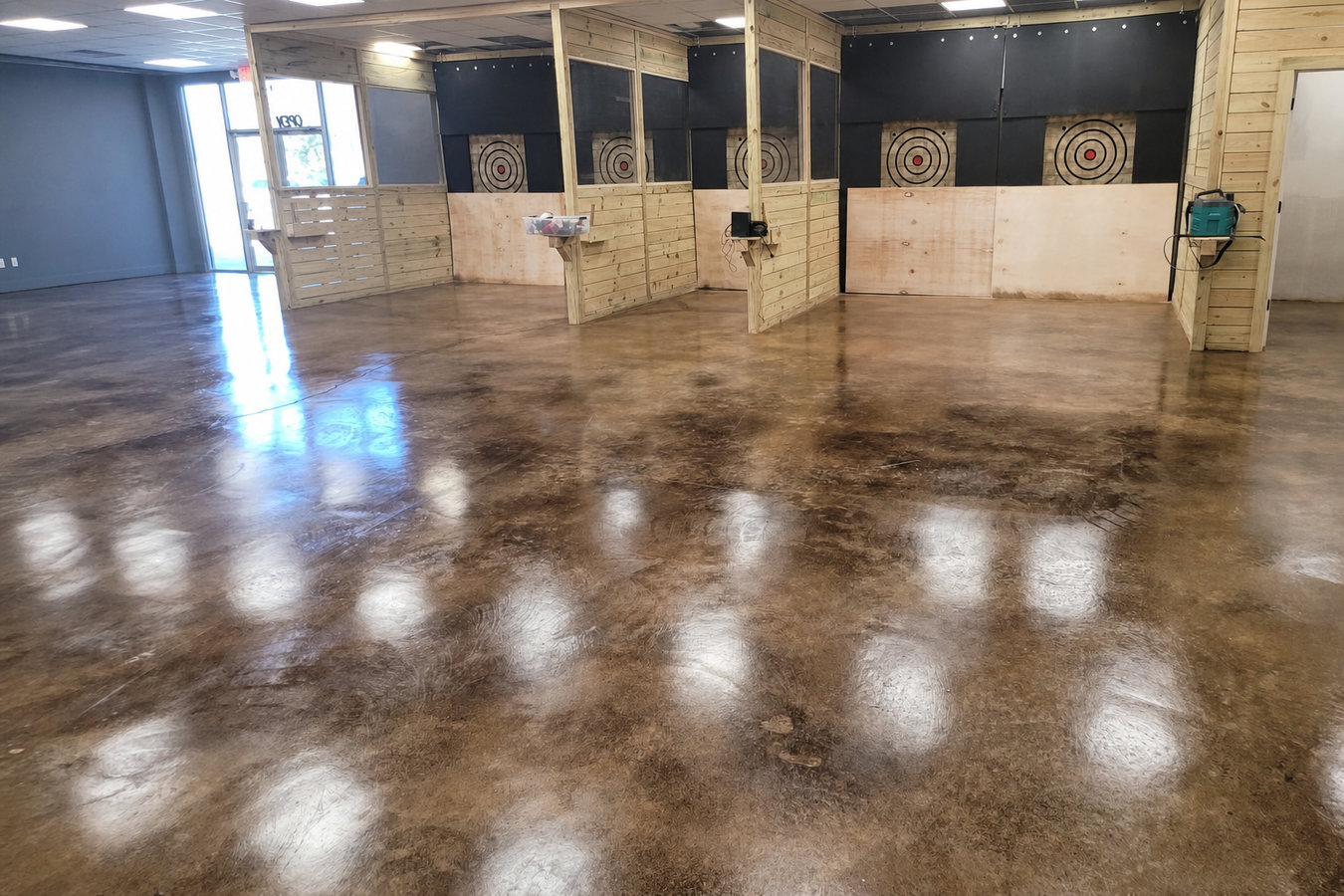
Stained concrete flooring in Homestead uses acid or water-based stains that soak into the slab and permanently change its color - most residential jobs take two to four days from prep through final sealing, with the slab ready for light foot traffic within 24 hours of the last coat.
The result looks rich and natural because the color is part of the concrete itself, not a film sitting on top of it. That is why stained floors do not peel or chip the way paint does, and why the finish holds up in Homestead's heat and humidity better than many surface coatings. Many homes in the area have a solid concrete slab underneath existing tile or carpet that is perfectly ready to stain once the surface is properly prepared. If you want the smooth reflective appearance that comes with mechanical grinding in addition to color, our polished concrete flooring service can be combined with staining for a finish that does both.
The most important part of any stained concrete job is the prep that happens before the stain goes down. Stain only penetrates clean, open concrete - and in Homestead, where slabs often carry old adhesive, moisture issues, or years of wear, thorough prep is what separates a result that looks great from one that looks blotchy.
If the tile, vinyl, or carpet in your home is cracked, stained, or dated and you are already planning to remove it, that is the right moment to consider staining the concrete underneath. Many Homestead homes have a solid slab beneath the existing flooring that is in good shape - you just cannot see it yet. Removing the old floor and staining what is underneath can cost less than new tile and produces a result that is easier to live with long-term.
A chalky white residue on your concrete or tile - especially after rain or during the humid summer months - is a sign that moisture is moving through the slab from below. This is common in Homestead given the high water table. A stained concrete contractor needs to know about and address this before starting work. Staining over it without treating the moisture first leads to a finish that fails quickly.
If you have recently done a remodel and the concrete is now exposed, it may look rough, patchy, or marked from construction. Staining is one of the most effective ways to turn that raw slab into a finished floor that looks intentional. Even slabs with minor surface imperfections can be transformed - the natural variation in acid staining can actually make those marks part of the character of the floor.
In Homestead's climate, carpet holds onto humidity, dust mites, and allergens in a way that makes your home feel warmer and less comfortable. If someone in your household has allergies or breathing sensitivities, switching to stained concrete eliminates a major source of indoor irritants. It is also far easier to keep clean when you are tracking in dirt and moisture from outside every day.
We offer both acid-based and water-based staining, and the right choice depends on the look you want and the condition of your slab. Acid stains react chemically with the minerals in the concrete to produce earthy, mottled tones - browns, rusts, tans, and soft greens - that are genuinely unique to each floor. Water-based stains work more like a dye and offer a wider color palette, including blues and brighter shades. We show you samples at the estimate so you can see how each option looks before any stain goes down. We can also work alongside our terrazzo flooring service if you want an aggregate-embedded finish in specific areas of your home.
Every job starts with thorough surface preparation: grinding, cleaning, and patching the slab so the stain can penetrate evenly. If your slab has elevated moisture - which is common in Homestead - we address that before starting. Decorative scoring, borders, and multi-color patterns are available for homeowners who want a more distinctive result. A protective sealer finishes every job, and we adjust the application method in South Florida's humidity to avoid trapping moisture under the topcoat.
Best for homeowners who want natural, one-of-a-kind earth tones with an organic, marbled appearance that cannot be replicated by any other finish.
Best for homeowners who want a specific color - including brighter or cooler tones - with more consistent and predictable results across the floor.
Best for homeowners who want a custom design - borders, geometric patterns, or multiple tones that create a floor unique to their home.
Best for Homestead slabs with elevated moisture readings - a mitigation step before staining protects the finish and prevents premature sealer failure.
Homestead's climate puts hard demands on flooring. Concrete staining handles those demands well because the color is embedded in the slab itself - it does not react to humidity the way wood does, it does not buckle or warp in the heat like vinyl can, and it does not trap the moisture and allergens that carpet holds onto in a warm, humid environment. The Biscayne Aquifer sits close to the surface throughout Miami-Dade County, and the water table in and around Homestead is high enough that many residential slabs experience upward moisture vapor transmission - a factor any contractor working here needs to test for and manage before staining begins. The Florida Department of Health notes that reducing soft flooring in humid climates can help lower indoor allergen levels - a practical benefit for households in South Florida year-round.
Staining is also a practical choice in a market where a significant share of homes were rebuilt after Hurricane Andrew in 1992. Those slabs are now 25 to 30 years old, meaning old adhesive, minor surface damage, and years of accumulated wear are common. With proper prep, those same slabs can be transformed into a finished floor that looks intentional and holds up in the South Florida climate. We serve homeowners throughout the area, including Palmetto Bay and Leisure City, and we bring the same prep-first approach to every slab we assess.
Tell us the room size, what is currently on the floor, and whether you have noticed any moisture or white residue on the slab. We respond within one business day and schedule a free in-home visit - because we do not quote without seeing your slab in person.
We inspect the slab condition, test for moisture, and look at what prep work is needed. If old adhesive, cracks, or elevated moisture are present - common in Homestead - we explain what that means for the scope and cost before you commit to anything.
The crew grinds and cleans the slab, then applies the stain - by spray, brush, or a combination - and gives it time to react and develop before neutralizing and rinsing. The sealer goes on last, applied in thinner coats in South Florida's humidity to avoid trapping moisture.
Light foot traffic is typically possible within 24 hours. Heavy furniture should wait up to a week. Before the crew leaves, we walk you through the finished floor, go over care instructions, and tell you when to schedule your first resealing - usually every two to four years.
Free in-home estimate. We assess the slab, show you stain samples, and give you a written price - no obligation, no sales pitch.
(786) 244-9586In Homestead, where the water table is high and humidity rarely drops, testing the slab for moisture before starting is not optional - it is the step that determines whether the finish holds up. We test every slab and address elevated moisture readings before applying any stain or sealer.
Florida requires contractors performing concrete work above certain thresholds to hold a state license, and Miami-Dade County adds its own registration requirements on top of that. You can verify any contractor's license through the Florida Department of Business and Professional Regulation - and you should, before anyone sets foot in your home.
The quality of a stained floor is almost entirely determined by how thoroughly the slab is prepared before the stain goes down. We do not rush this step. Old adhesive, surface damage, and cracks all need to be addressed first - because stain only penetrates clean, open concrete, and a blotchy result almost always traces back to poor prep.
A significant share of Homestead's homes were rebuilt in the mid-1990s on concrete slab construction. Those slabs are now 25 to 30 years old and often carry layers of old adhesive or wear that require extra prep time. We have worked on these slabs throughout the area and know what to expect before the first pass of the grinder.
Every one of those points leads back to the same thing: a finished floor that looks right and stays that way. In Homestead's climate, the shortcuts that work in drier markets do not work here - and we have built our process around the conditions that actually exist on the ground in South Florida.
Aggregate-embedded flooring that brings classic South Florida style and extreme durability to residential and commercial spaces.
Learn MoreTransform your existing slab into a smooth, reflective surface using diamond grinding - no coatings, no grout lines, just the concrete itself.
Learn MoreLate fall through early spring is the best window for staining in South Florida - lower humidity means better curing. Spots fill up fast heading into the season.