Loading...
Serving Homestead, FL and surrounding areas. (786) 244-9586
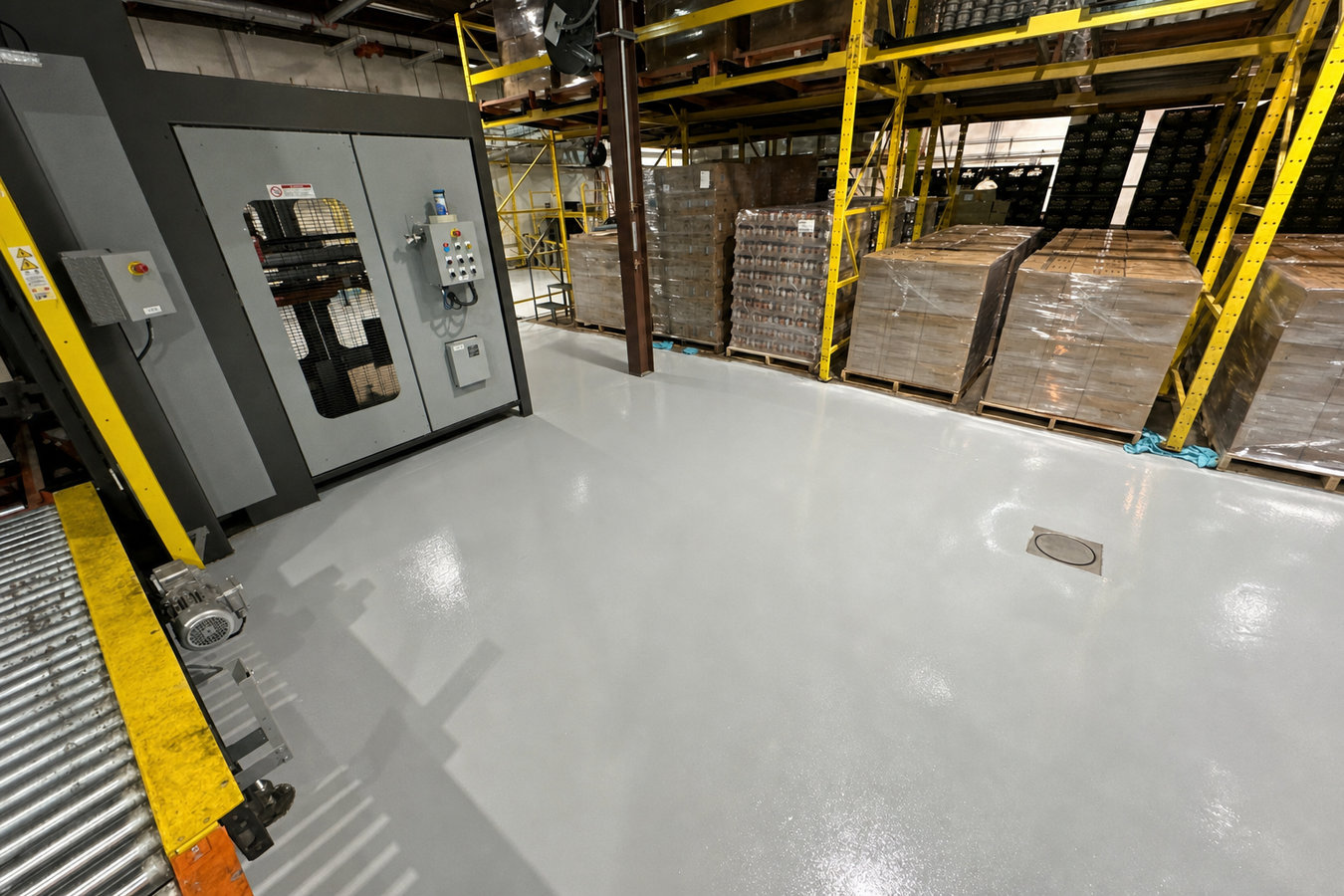
Your warehouse, shop, or facility floor takes daily punishment. We install commercial-grade epoxy systems that resist heavy equipment, chemical spills, and Homestead's year-round humidity - without shutting you down longer than necessary.
Commercial and industrial epoxy floor coatings in Homestead, FL are thicker, harder, and more chemically resistant than residential garage systems - most jobs take two to four days from surface prep through final cure.
If you run a warehouse, auto shop, agricultural packing house, or any facility where the floor takes real punishment, a hardware-store epoxy kit is not going to cut it. Commercial-grade systems are designed to handle forklifts, chemical exposure, and the constant cleaning cycles that come with industrial work. In Homestead, where the water table sits just below the surface and slabs absorb moisture year-round, choosing the right product and testing for moisture before you start is what separates a floor that lasts from one that peels within months.
We also work on residential garages and utility spaces - those projects use our standard epoxy floor coating service. Not sure which system your space needs? Call us and we will tell you straight.
A fine gray powder on the floor after sweeping, or small craters forming in the surface, signals the concrete is breaking down. In Homestead's humid climate, bare concrete absorbs moisture repeatedly and that accelerates surface deterioration. An epoxy coating seals the surface and stops the cycle.
Those white deposits are moisture moving up through the slab from below - very common in Homestead given the shallow water table and porous limestone bedrock underneath much of the city. A contractor who identifies this early can treat the slab properly before applying epoxy, preventing a much more expensive repair later.
Bare concrete is porous. Oil, chemicals, food residue, and other spills soak in and cannot be scrubbed out. If your facility floor looks permanently dirty, that is a strong sign the surface needs to be sealed. An epoxy coating creates a non-porous surface that wipes clean easily and resists future staining.
If forklifts or pallet jacks are causing cracks and gouges in your concrete, the surface is not holding up to the load. A commercial-grade epoxy system adds a hard, impact-resistant layer that protects the concrete underneath. Catching this early - before cracks become structural - is far less expensive than slab replacement.
Every commercial epoxy job starts with mechanical surface preparation - diamond grinding or shot blasting the concrete to the right profile so the coating bonds properly. We then test for moisture and, when needed, apply a moisture-tolerant primer before any epoxy goes down. From there, the system we recommend depends on what your facility actually does.
For high-traffic warehouses and distribution spaces, a standard two-coat epoxy system with a clear topcoat is usually the right call. For agricultural packing houses, cold storage, and food-service kitchens in Homestead's farming corridor, we use multi-layer systems with chemical-resistant topcoats that hold up to hosing, fertilizer, and food-safety cleaning requirements. If you also need flooring that can handle extreme chemical exposure, urethane cement flooring is worth considering as an alternative. For smaller vehicles or lighter commercial use, garage floor coatings may suit your needs at a lower cost point.
Two-coat epoxy with clear topcoat - suited for warehouses, retail back-of-house, auto shops, and light industrial spaces with moderate traffic.
Multi-coat epoxy with a chemical-resistant polyurethane or polyurea topcoat - designed for agricultural, food-processing, and manufacturing facilities.
Moisture-tolerant primer followed by full epoxy build-up - the right choice for Homestead slabs showing visible moisture vapor or high humidity readings.
Homestead is the center of Miami-Dade's agricultural belt, home to packing houses, cold storage facilities, nurseries, and food-processing operations that put specific demands on their floors. The same porous limestone geology that feeds the Everglades to the west also means concrete slabs here hold more moisture than slabs in drier parts of the country - even when the surface looks and feels dry. That is why moisture testing is not optional for us. We test every commercial floor before we start, and we use systems specifically rated for South Florida's conditions.
Homestead has also seen significant commercial and logistics growth in recent years, with new warehouses and distribution centers coming online regularly in Homestead and nearby Florida City. If you are fitting out a new space, installing epoxy before equipment and shelving go in is much easier and less expensive than doing it later. The Occupational Safety and Health Administration also sets requirements for floor surfaces in workplaces - a sealed, non-porous epoxy floor makes compliance much more straightforward.
We ask about the size of the space, how the floor is currently used, and any known issues like cracks, stains, or previous coatings. You will hear back within one business day. We do not send you to voicemail and hope for the best.
We visit your facility, measure the area, test for moisture, and check for any cracks or old coatings that need to be removed. You receive a written estimate that breaks out preparation, materials, and labor - so you can compare bids fairly.
We grind or mechanically profile the entire floor to open up the concrete surface. Any cracks or damaged areas are filled and leveled. If moisture is detected, a moisture-blocking primer coat is applied and allowed to cure before the main coating begins.
Epoxy is applied in the specified number of coats, with each coat cured before the next goes down. Final walkthrough covers what to watch for, how to clean the surface, and when it is safe to bring equipment back in.
Submit a request or call directly - we respond within one business day and we come to you for the estimate. No obligation.
(786) 244-9586We test every commercial slab for moisture vapor before we start. In Homestead, where the water table is shallow and concrete sits on porous limestone, slab moisture is one of the most common causes of coating failure. We catch it early and address it properly.
We have worked on the kind of facilities Homestead actually has - packing houses, cold storage, food-prep spaces. Those jobs require specific products and methods. We know what questions to ask and what the floor needs to pass a cleaning inspection.
We can work in sections when a full facility shutdown is not possible. It takes longer overall, but it keeps part of your operation running. We plan this upfront and give you a realistic timeline - not an optimistic one that falls apart on day two.
Our estimates cover surface preparation, moisture treatment if needed, all coats, and cleanup. The number we give you at the start is the number you pay at the end. If we find additional issues during prep, we tell you before we proceed.
Homestead business owners have enough to manage without wondering if their floor is going to start peeling six months after installation. We build our process around the conditions that actually exist here - the moisture, the heat, the agricultural demand - not a generic template from somewhere else.
For food-service and agricultural facility floor requirements in Florida, the Florida Department of Agriculture and Consumer Services publishes compliance guidance for food establishments.
A residential-grade coating option for garages and utility spaces that see lighter daily use.
Learn MoreAn alternative to epoxy for facilities requiring extreme chemical resistance and thermal shock tolerance.
Learn MoreSpring slots fill fast in Homestead - schedule your estimate now and lock in your installation date before the summer heat and storm season make scheduling harder for everyone.